
Dance of the Hesperides (The Lady Lever Art Gallery) - Poetry in Response to Art

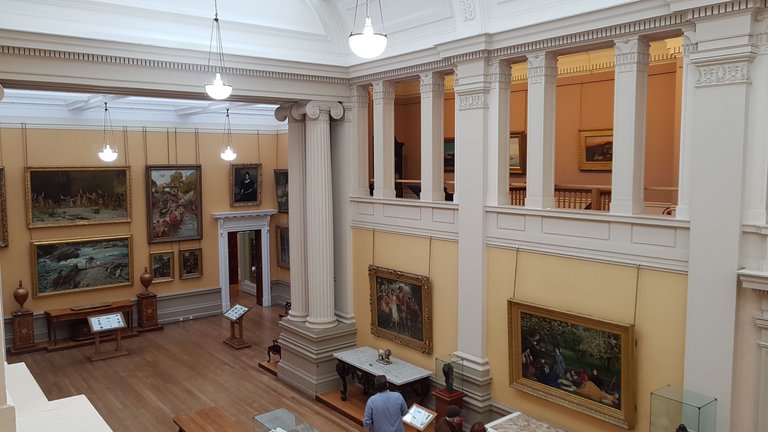
Today I would like to share the second poem inspired by my trip to the Lady Lever art gallery, pictured above. Wandering around this building, soaking up the art sparked memories of taking 'Greek classics' in college many moons ago. So much art is based on classical Greek mythology, and today's choice is no exception.
I don't want to talk too much about the gallery though, if you would like to learn more about the history of this place check out my post from yesterday about The Lady Lever Art Gallery.
I will briefly touch on the history of poetry inspired by art which is known as Ekphrastic Poetry.
Ekphrastic Poetry can be defined as a vivid poetic description of a work of art or even a photograph. Through the imaginative act of narrating and reflecting on the scenes depicted in a painting or sculpture, the poet may amplify and expand its meaning. This form of poetry is ancient in origin, stretching back to ancient Greece.
One of the earliest and most commonly cited forms of ekphrasis occurs in The Iliad, when Homer provides a long and discursive account of the elaborate scenes embossed on the shield of Achilles. It should be no surprise, then, that the term ekphrasis derives from Greek, where it literally means "description" and was formed by combining the prefix ex- ("out") with the verb "phrazein" ("to point out or explain"). "Ekphrasis" first appeared in English in the early 18th century.
Source
As touched upon in my last Ekphrastic poem, Icarus' Lament, the legend, or allegory, behind a piece of art can spark modern day comparison. Highlighting the timeless connection between humankind's storytelling, or hint at the cyclic nature of history.
The act of creating Ekphrastic Poetry - especially when combined with research - can truly open new doors to the imagination.
As I'm primarily a free-verse poet, I decided to challenge myself by writing an English (or Shakespearean) sonnet reflecting aspects of the mythology of the three Hesperides. this form of poetry comprises 14 lines of three quatrains and a concluding couplet, with a rhyme scheme of ABABCDCDEFEFGG. Check out the results below and see if you can identify the rhyme scheme.
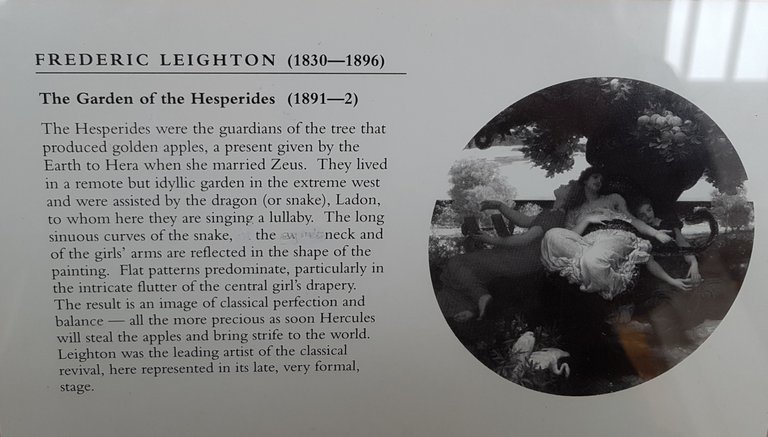
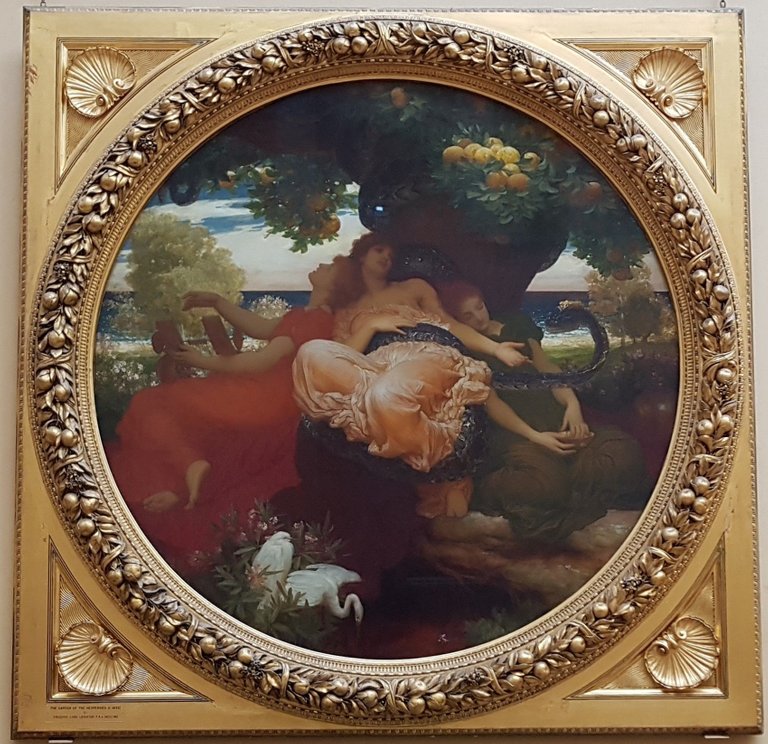
Dance of the Hesperides
Aurora flash in her silver hair
glinting like shale-washed pearls
as she serenades the sun's flare.
lavender clouds shroud empyrean chapel,
her Elysium song illuminates molten
petals of shinning sacred apples.
in the mingled melody of the spheres
lulling Helios to a slumbering sigh
in eternal rhythm down the years.
day ebbs to night in heavenly tides.

Research sources:
https://en.wikipedia.org/wiki/Hesperides
https://en.wikipedia.org/wiki/Empyrean
https://www.britannica.com/topic/Helios-Greek-god
https://www.britannica.com/topic/Elysium-Greek-mythology
https://www.merriam-webster.com/dictionary/ekphrasis


 Click banner to buy anthology
 Click banner to visit the community page
You've written a fine poem with mythological themes, drawing on elements characteristic of Shakespearean poetry. Best regards, @raj808.
Thanks celf.magazine
I'm glad you enjoyed the Shakespearean sonnet and associated artistic analysis 🙂
👍