
🔬🦁🌪 A DAY FULL OF KNOWLEDGE, SCIENCE, PHYSICS, AND BIOLOGY! 🌪🦁🔬 (ENG-ESP)

- Today we will have a very informative post, as we visited the Pavilhão do Conhecimento in Lisbon, Portugal, which, as its name suggests, features exhibitions on science, physics, and biology; the exhibitions usually change every year. Today they had exhibitions on animals, and today I will share with you the knowledge I acquired there.
ESP
- Hoy tendremos un post de muchos conocimientos, ya que visitamos el Pavilhão do Conhecimento en Lisboa, Portugal, y, como su nombre lo dice, son exposiciones sobre ciencia, física y biología; cada año las exposiciones suelen cambiar. El día de hoy tenían exposiciones sobre los animales y el día de hoy te comparto los conocimientos adquiridos en el lugar.

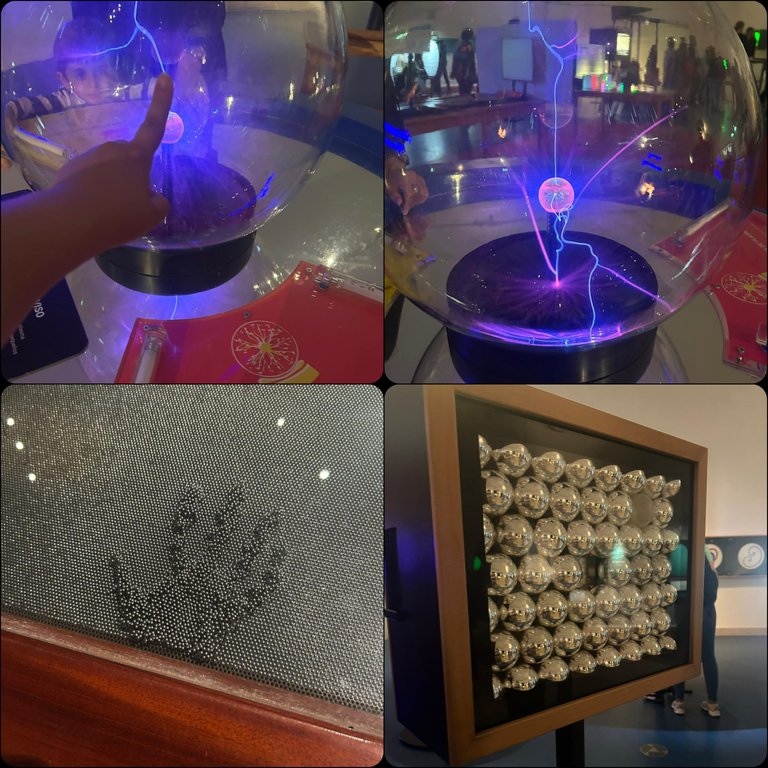
In the first section of the venue, we can observe a variety of knowledge; most of the exhibits are interactive, accompanied by a brief explanation of what is happening and why, so let's talk a little about them.
The vibrating string: We can change the vibration patterns just by plucking the string with different levels of force: very gently, gently, and strongly. The magic behind this is that the string is attached to a metal strip that vibrates 120 times per second, and each vibration generates a wave that travels along the string.
Shadow photography: Would you like to take a photo of your shadow in a completely dark room? How is that possible, you may wonder. Black magic? AI? Well, no, here we're going to talk about chemistry. This room is made of zinc sulfide crystals that continue to glow after the flash is activated, meaning your shadow is captured for a few moments. So the magic here is the material of the place and a flash.
- Tornado: Something that nature does on its own, but in this exhibit they formed a tornado. How did they do that? And why? This activity aims to demonstrate how a tornado forms and how, when you try to interfere to break it up, it reforms. For this reason, when there are tornadoes, human intervention is often ineffective because tornadoes are based on air with two different temperatures: hot and humid air come together and begin to spin around each other, forming a tornado. So, these aluminum tubes are emitting hot air and humid air, which created the tornado we can see.
ESP
En la primera sección del lugar podemos observar un poco de variedad de conocimientos; la mayoría de las exposiciones son interactivas junto con una pequeña explicación de lo que sucede y el porqué sucede, así que vamos a hablar un poco de ellas.
La cuerda vibrante: Podemos cambiar los padrones de vibraciones solo pujando la cuerda con diferentes niveles de fuerzas muy suaves, suaves y fuertes. La magia que hace esto es que la cuerda está con una tira metálica unida que está vibrando 120 veces por segundo y cada vibración genera una onda que recorre la cuerda.
Fotografía de sombras: Quieres tomarle una foto a tu sombra en un cuarto totalmente oscuro; ¿pensarás cómo eso es posible? ¿Magia negra? ¿AI? Pues no, aquí vamos a hablar de química. Este cuarto está hecho de cristales de sulfuro de zinc que continúan a brillar después que el flash es activado, o sea, tu sombra queda impactada por unos momentos, así que la magia aquí es el material del lugar y un flash.
Tornado: Algo que la naturaleza hace por sí misma, pero en esta exhibición formaron un tornado. ¿Cómo hicieron eso? ¿Y cuál es el motivo? Esta actividad quiere demostrar cómo se forma un tornado y cómo, al intentar interferir para romperlo, se vuelve a formar. Por ese motivo, muchas veces, cuando hay tornados, la mano humana no puede hacer nada porque la base de los tornados es el aire, con dos temperaturas diferentes; el caliente y húmedo se unen, comenzando a girar entre sí, formando un tornado. Así que esos tubos de aluminio están saliendo aire caliente y otro húmedo y eso creó el tornado que podemos observar.




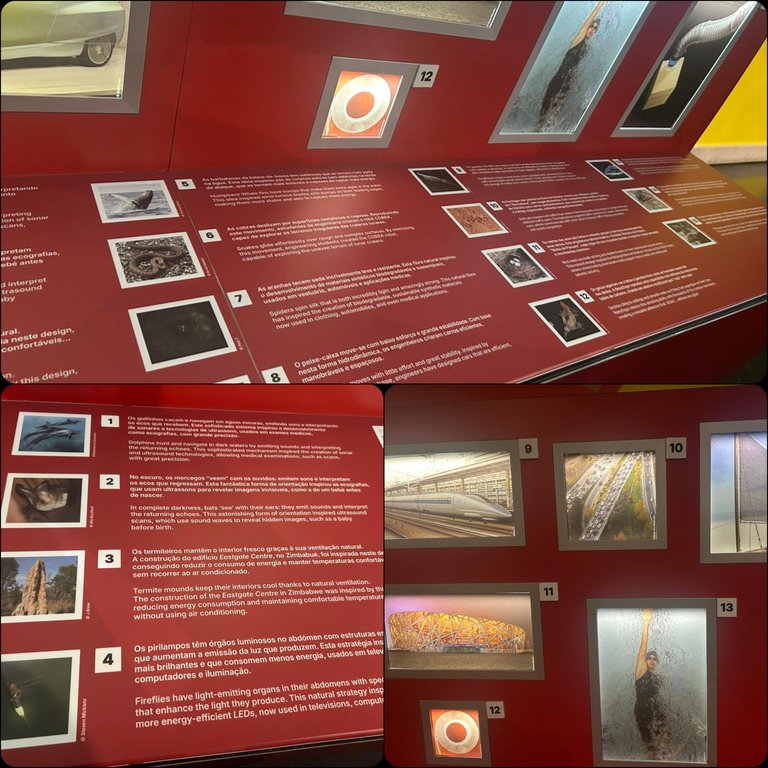
Now we're going to talk about one of my favorite things, and that is biology, our beautiful animals, from felines, reptiles, insects, canines, crustaceans; from all these groups we can learn interesting things about them that never cease to amaze us. In all these exhibits we have interactions, and I found it very fun how we can compare ourselves humans with the species.
Beetles: These small insects, like ants, carry a force much greater than their own, so in this machine we can compare how much we can push with force N; I managed 69; if the beetle were my size, it could push 790,000 N. Crazy information, isn't it?
Iberian lynx: A genius hunter of camouflage, it is a beautiful feline found only on the Iberian Peninsula, but its superpower is not only camouflage; its jump is also out of this world, allowing it to hunt birds. In this exhibition, we can jump and try to reach the jump of this feline, but I didn't even come close.
Crab: This friend is famous in marine life, but this time we're going to talk about the claw it uses to defend itself and its strength. We can compare our strength to that of this animal; I reached 126 N, but the strength of this claw is 3,300 N, so don't be surprised that if this animal defends itself, the damage it does is not pleasant at all.
Wolves: When we talk about wolves, what is the first thing that comes to mind? Besides being very large dogs, what makes us want to hug them, since their fur is so fluffy? But there is something else that makes them stand out in the animal kingdom, which is their howl, which serves as a means of communication within the pack to report prey, territory, and communicate with each other; in the case of the Iberian wolf, its howl can reach up to 16 km away. In this exhibition, you can howl and see if you can reach 16 km; sadly, I didn't even reach a kilometer, but I also howled with enthusiasm because I was embarrassed, hahaha.
ESP
Ahora vamos a hablar de una de mis cosas favoritas y es que ya vamos a entrar en la parte de biología, nuestros hermosos animales, desde felinos, reptiles, insectos, caninos, crustáceos; de todos esos grupos podremos aprender cosas curiosas de ellos que nunca nos paran de sorprender. En todas estas exposiciones tenemos interacciones y me pareció muy divertido cómo podemos compararnos nosotros los humanos con la especie.
Los escarabajos: Estos pequeños insectos, al igual que las hormigas, cargan una fuerza mucho mayor a la de ellos, así que en esta máquina podemos comparar cuánto nosotros podemos empujar con fuerza N; yo logré 69; si el escarabajo tuviera mi tamaño, podría empujar 790.000 N. Una locura esta información, ¿no?
Lince ibérico: Un cazador genio del camuflaje, es un hermoso felino que se encuentra solo en la península ibérica, pero no solo su superpoder es el camuflaje; también su salto es de otro mundo, el cual le permite cazar pájaros. En esta exposición podemos saltar e intentar llegar al salto de este felino, pero ni de cerca llegué.
Cangrejo: Este amigo es famoso en la vida del mar, pero esta vez vamos a hablar de esa pinza que utiliza para defenderse y su fuerza. Podemos comparar nuestra fuerza con la de ese animal; yo llegué a 126 N, pero la fuerza de esta pinza es de 3.300 N, así que no te sorprenda que, si este animal se defiende, el daño que hace no es nada agradable.
Lobos: Cuando hablamos de lobos, ¿qué es lo primero que viene a nuestra cabeza? Además de que son perros bien grandes, ¿qué nos provoca abrazarlos, ya que su pelaje es bien esponjoso? Pero hay otra cosa que los resalta en el reino animal, que es el aullido, que les sirve como una comunicación entre la manada para reportar caza, territorio y comunicarse entre ellos; en el lobo ibérico, su aullido puede alcanzar hasta 16 km de distancia. En esta exhibición puedes gritar y ver si llegas a los 16 km; tristemente, no llegué ni a un kilómetro, pero también grité con ganas porque estaba con vergüenza, hahaha.





You can check out this post and your own profile on the map. Be part of the Worldmappin Community and join our Discord Channel to get in touch with other travelers, ask questions or just be updated on our latest features.
https://x.com/jlufer/status/2005653938054234243?s=20
We appreciate your work and your publication has been hand selected by the geography curation team on behalf of the Amazing Nature AN Community. Keep up the good work!
Thanks for your contribution to the STEMsocial community. Feel free to join us on discord to get to know the rest of us!
Please consider delegating to the @stemsocial account (85% of the curation rewards are returned).
Consider setting @stemsocial as a beneficiary of this post's rewards if you would like to support the community and contribute to its mission of promoting science and education on Hive.