
A Weekend in Quedlinburg


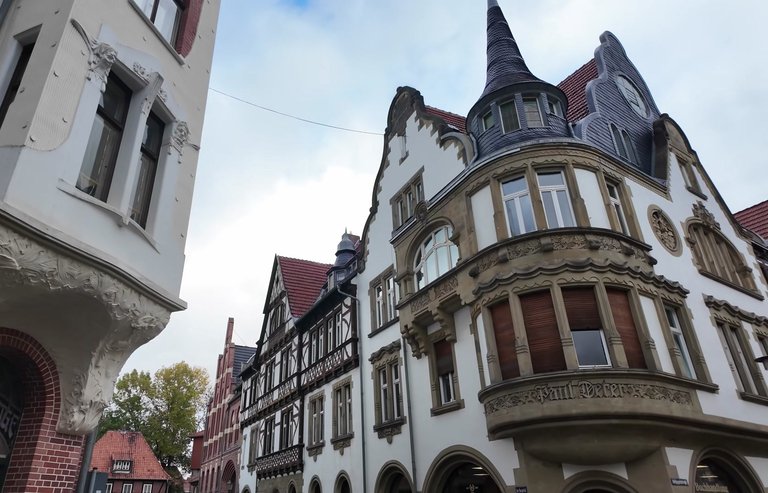
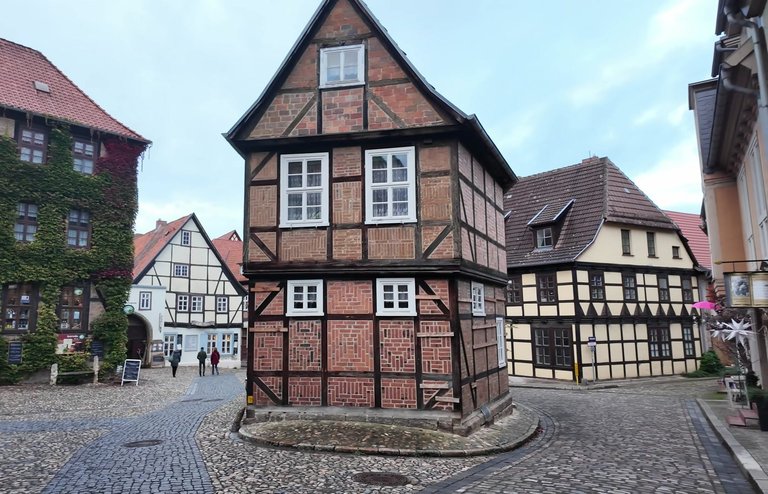
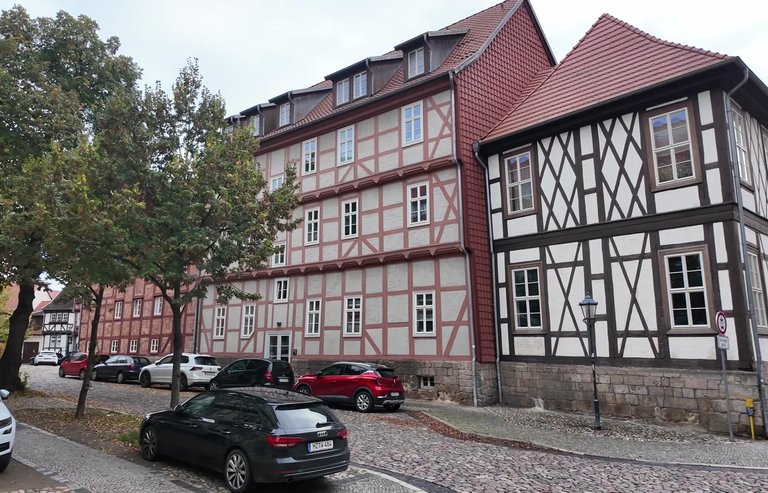
Hello friends. Today I would like to tell you about another small yet very interesting town I visited during my trip to Germany. This town is Quedlinburg, located in the state of Saxony Anhalt. It was founded in the 10th century by King Henry I, also known as Henry the Fowler, who is buried here. As always we began our walk at the Marktplatz, the market square. The square is both beautiful and completely authentic. There are many half timbered buildings here. Overall Quedlinburg holds the record for having the highest number of half timbered houses in Germany. According to various sources, the town has around two thousand of these houses. They appear on almost every corner and no two look the same. The colors differ, the constructions vary slightly and the infill patterns within the wooden framework change from building to building. The overall appearance is very distinctive.




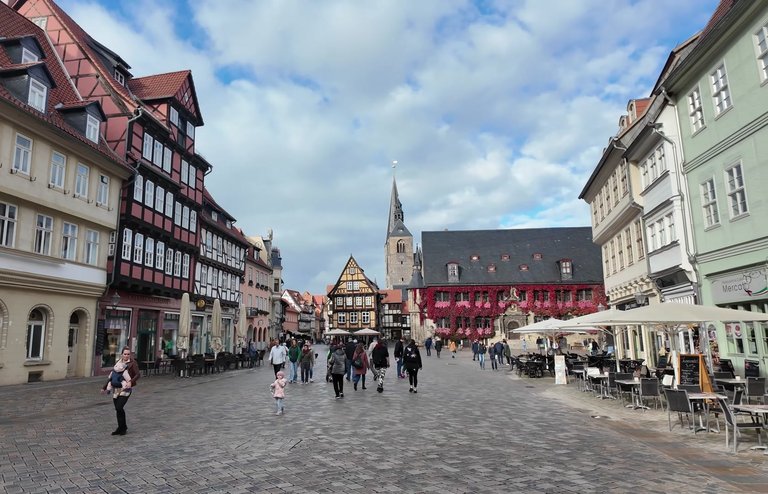

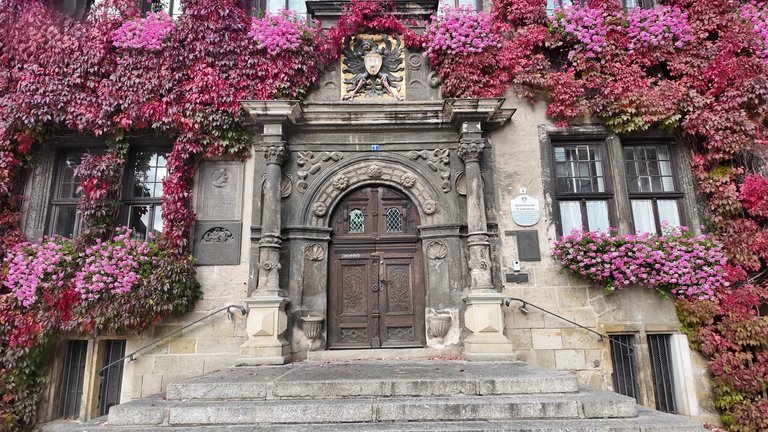
On the square stands the equally characteristic town hall, which is entirely covered in ivy. When we visited, the ivy had taken on a deep red burgundy tone. In other seasons the leaves sometimes fall away completely, while in summer they turn green. As a result the town hall changes its appearance with the seasons and gives the square a different character each time.



Also located on the square is the Roland Statue. This statue symbolizes the town’s independence, more precisely its status as a free imperial city. Quedlinburg was one of seven cities to receive this status, which was granted in the millennium year.


To see as much as possible in a short time and in an organized way, we decided to take a tourist train. It turned out to be a very practical choice, since Quedlinburg is extensive not only in the number of its half timbered houses but also in the area they cover. Approximately 84 hectares of the town are filled with this architectural style. It spans from the town’s founding to the late 19th century, up until the emergence of Art Nouveau. There are also a few notable buildings in the city that reflect this later architectural style.

One of the most distinctive features of Quedlinburg’s half timbered architecture is the small pyramid shaped ornaments placed on the beams. These details can only be seen here. The town itself was naturally divided according to professions. The Marktplatz formed the central area where the nobility lived, while craftsmen resided outside the city walls. Even today, remnants of the walls can still be seen. Craft guilds usually settled close together within their own groups.


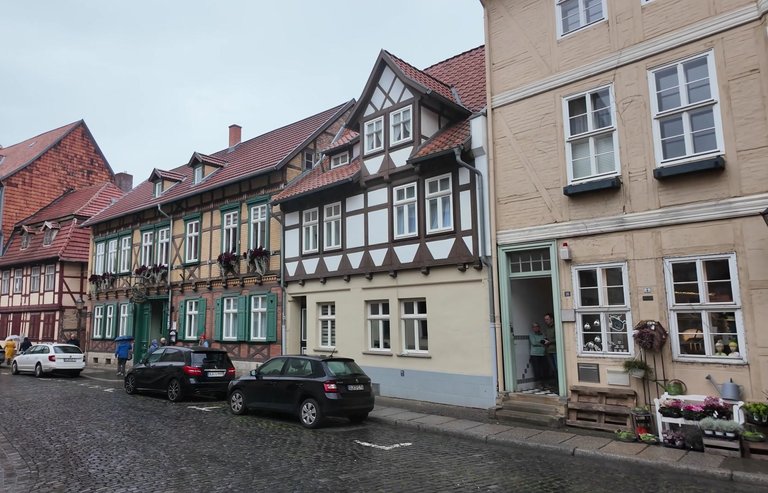


The town was especially famous for its shoemakers. Boots were produced here and leather was dyed and processed. There was also a separate street where potters lived. They were always located apart because they worked with fire, which posed a serious risk. In general, the town was very active in trade and was a member of the Hanseatic League. Its main trade goods included silver and garments made from various fabrics. Linen was produced here and there was also trade in wool, silk and salt. Overall, it was an economically lively town.


The most romantic district is considered to be Münzenberg, also known as Monastery Hill. It is a hill filled with small houses and takes its name from the monastery that once stood there. On another hill stands a castle that has been restored in recent years and looks very impressive.
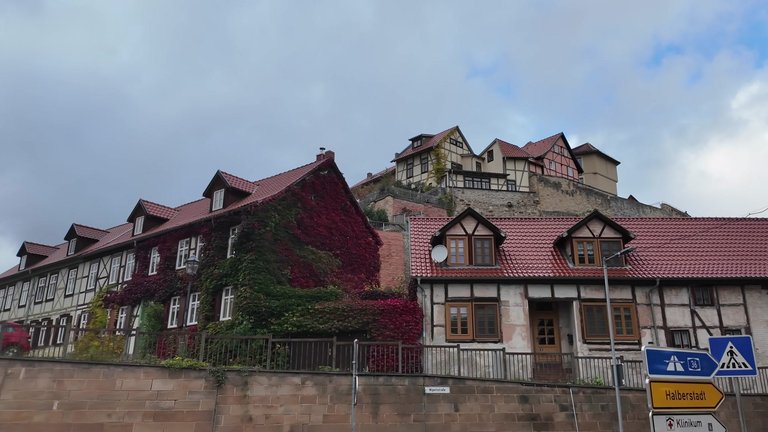

In more modern times, Quedlinburg also earned significant income from the seed trade. Several large companies sold both flower seeds and agricultural seeds. Sugar beet seeds were particularly popular and brought considerable wealth. Even today, several villas can be seen in the town that were largely built with money earned from this trade. This is a very interesting detail.


Another intriguing aspect is the origin of the town’s name. According to legend, Quedl was the name of a dog that lived here and warned the townspeople of approaching bandits by barking loudly. As a gesture of gratitude, the town was named after the dog. As far as I know, this is the first city I have encountered whose name comes from a dog.


The tourist train ride was well worth it, especially in such changeable weather. Another important fact about Quedlinburg is that Germany’s first female doctor came from here. Her name was Dorothea. She was a nun who served at St Nicholas Church. According to legend, St Nicholas appeared to her and told her that she should heal people. At first, she was not easily accepted as a physician, but she questioned the diagnoses made by male doctors and was often proven right. Today, she is remembered in the town with great respect.


Another detail, perhaps less important but still striking, is that Quedlinburg once had many breweries, most of which produced dark beer. One of these historic breweries still stands today. Beer is not my favorite drink, but if you enjoy it, it is worth trying.

We decided instead to try another well known local specialty: cheesecake. According to popular opinion, the most authentic Quedlinburg cheesecakes are served at Café Vincent. You can actually watch the production process there. They make a total of 191 different varieties, although the menu changes slightly with the seasons. Be careful, as the portions are very large. We could not finish ours and had to take them away. The base of the cheesecake is generally similar, while the main difference lies in the toppings. We tried the blackberry version, which was very good. The rosemary raspberry was also nice, but the blackcurrant stood out the most.


I definitely recommend visiting Quedlinburg. It is a very charming town and was perfect for a weekend trip. In general, small German towns attract great interest thanks to their unique sense of authenticity.

See you on the next journey.
You can check out this post and your own profile on the map. Be part of the Worldmappin Community and join our Discord Channel to get in touch with other travelers, ask questions or just be updated on our latest features.
Thank you so much 🤗
https://www.reddit.com/r/Outdoors/comments/1pvvgr2/town_hall_covered_in_ivy/
This post has been shared on Reddit by @mayt through the HivePosh initiative.
I really learned a lot from reading the article. You have beautifully described the history of Quedlinburg and the old houses. It is nice to see that this city, which is hundreds of years old, still looks so beautiful.
Thanks a lot. I was completely charmed by the old houses myself while I was there 😍
Quedlinburg is a beautiful and meaningful place because it preserves history so well. Its medieval houses, streets, and landmarks show strong cultural value, making it an excellent example of how history can be protected and appreciated even today.
I completely agree. Quedlinburg is such a perfect example of how we can honor the past in the modern world. Thank you for the lovely comment and for reading my post 😍
Your welcome. It's my pleasure.
Hiya, @ybanezkim26 here, just swinging by to let you know that this post made it into our Top 3 in Travel Digest #2785.
Your post has been manually curated by the @worldmappin team. If you like what we're doing, please drop by to check out all the rest of today's great posts and consider supporting other authors like yourself and us so we can keep the project going!
Become part of our travel community:
Thank you so much 🤗
You are very welcome @larissalugo! it was well deserved. ☀️
We are already looking forward to reading more about your adventures!
Quedlinburg is such a beautiful town. For some places you just have to visit in different season to see all its colors. That ivy and flowers detail on facades is super feature. In different season you will see different detail.
Houses with wooden structure that is visible is another excellent sight. To preserve them as it and have so many houses with same structure is right thing to do. You can see structural elements on the houses and at some part these are Aesthetic elements as well. The elements being handmade makes every house unique and special.
Lovely place and lovely read. You managed to capture all of the towns uniqueness.
Thanks Sammy. It’s definitely a town that deserves a visit in every season to see all its different faces. Thanks for stopping by 🤗
!discovery
!PIZZA
This post was shared and voted inside the discord by the curators team of discovery-it
Join our Community and follow our Curation Trail
Discovery-it is also a Witness, vote for us here
Delegate to us for passive income. Check our 80% fee-back Program
$PIZZA slices delivered:
@jlinaresp(14/15) tipped @larissalugo
Send $PIZZA tips in Discord via tip.cc!
Germany it's really a country rich of many beautiful places and cities!!😍 I'm totally charming by the fairytale atmosphere of this city you made amazing photos!!
The atmosphere there is really special and I’m so happy I could share a bit of that magic through my photos. Thank you for your lovely comment 😍
You showed us one of the remarkable towns in Germany. A country known for such towns. The country has many, many castles, and the town created around it feels like they are quite the same to what they were in the past when build. I do live the so called 'fachwerk' houses, the wooden beams going diagonal, next to horizontal and vertical. A typical German way of construction. Some of the market square houses are simialr to farm houses, except they have more floors. The roofs are mighty, with 2 sometimes 3 levels. I do wonder why they made these weigh roofs. Perhaps some (local) law drove this back in the days; Perhaps limitations in construction resulted in this; Perhaps it was their favourite architecture. I never looked into this, but somehow I wonder about this already for the last five decades. Born and raised in the country to the west of Germany, I spend quite a bit of time in Germany when I was a kid, child and adult.
The tourist train looks super nice! By far a none-standard one!
What will be your next trip?
My next stop after this was actually Wernigerode, another fairytale town nearby. Hope you'll enjoy that post as well. Thank you for your insightful comment 😍