
Raising a cassava plantation successfully

Hello Hivers 💯
Raising a cassava plantation successfully requires careful planning, proper land preparation, good planting materials, and effective management.

Here’s a step-by-step guide:
- Selecting a Suitable Site
Choose well-drained, loamy, or sandy-loam soil with a pH of 5.5–7.0.
Avoid waterlogged areas and heavy clay soils.
Ensure good sunlight exposure for optimal growth.
- Land Preparation
Clear the land by removing weeds, bushes, and debris.
Plow and harrow the soil to loosen it for better root penetration.
Create ridges or mounds in areas with heavy rainfall to improve drainage.
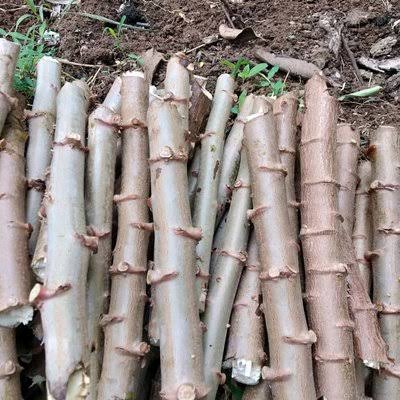
- Selecting and Preparing Planting Material
Use healthy, mature cassava stem cuttings (8–12 months old) from disease-free plants.
Cut stems into 20–30 cm lengths, ensuring each has 4–6 nodes.
- Planting
Plant the cuttings horizontally, vertically, or at an angle (depending on soil conditions).
Spacing: 1m × 1m (for optimal growth) or 1m × 0.8m (for higher yields in small areas).
Best planting time: Start of the rainy season.
- Weed and Pest Control
Weed regularly (first 3–4 months are crucial).
Use mulch to suppress weeds and retain soil moisture.
Control common pests like cassava mealybugs and diseases like cassava mosaic virus using resistant varieties and proper field sanitation.
- Fertilization and Soil Management
Apply organic manure or compost before planting.
Use NPK (15:15:15) fertilizer at 8 weeks after planting (if soil is poor).
Rotate crops with legumes (e.g., cowpea) to improve soil fertility.
- Harvesting
Cassava is ready for harvest 6–12 months after planting, depending on the variety.
Harvest by loosening the soil and pulling the plant out carefully.

Kindly try it out.
Ben