
Spiti: The Expedition I Took Years to Finally Write About

Hey Everyone,
There are some journeys you write about immediately after coming back. You are still carrying the dust of the road, your camera is full of photographs, your clothes smell like the mountains, and every conversation somehow turns into a story about where you have just been. And then there are journeys that you don't write about for years. Not because they weren't important, but perhaps because they were too difficult to explain. My Spiti expedition became one of those journeys. I came back from the mountains with hundreds of photographs, endless stories, frozen fingers, a head full of roads, storms, empty valleys and strange little encounters, and somehow life got in the way. Work got busy, responsibilities piled up, days became months, and months quietly became years. Every once in a while I would open that old folder of photographs and tell myself, "I should write about this trip." I never did. Until now. Looking back at it today, from a completely different life where I am slowly moving towards pursuing full-time travel, I realize that perhaps I needed all those years to understand what that expedition actually meant to me. At the time, I thought I was going to Spiti to explore a remote Himalayan valley. I didn't realize I was slowly discovering a version of myself that wanted to live differently.

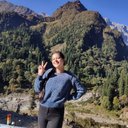
Spiti was never the kind of place that felt like a normal holiday destination. Even before reaching there, there was something about the idea of Spiti that felt wild and slightly unreasonable. The photographs showed enormous brown mountains, tiny villages clinging to slopes, monasteries sitting silently above valleys, winding roads disappearing into nothingness and skies that seemed too large to belong to the same world as the cities we come from. But photographs are polite. The real Spiti is not. It is rough, dry, cold, dusty, beautiful, unpredictable and sometimes completely unforgiving. The mountains don't try to entertain you. There are no lush forests waiting around every corner, no easy trails and no guarantee that the weather will cooperate with your plans. You travel through a landscape that feels almost stripped down to its bones. The mountains are mostly shades of brown, grey, rust and gold, and against them the sky looks impossibly blue. Villages appear suddenly like tiny islands of life in an enormous desert, with green fields around them made possible by mountain streams. You begin to understand that every tree, every crop and every human settlement here exists because somebody has learned how to survive in a landscape that doesn't easily give anything away.

The crazy part of the expedition wasn't even the destination. It was the feeling of constantly moving without really knowing what the next few hours would bring. We travelled like nomads, carrying what we needed, stopping wherever the landscape demanded our attention, waking up without the comfort of knowing exactly how the day would unfold. There was something intoxicating about that uncertainty. In normal life, uncertainty is something most of us spend enormous amounts of energy trying to eliminate. We want confirmed hotel bookings, fixed itineraries, reliable internet, predictable weather, known routes and return tickets. In Spiti, many of those things suddenly became irrelevant. The road itself became the plan. If the road was open, we went. If the weather changed, we waited. If somebody suggested taking a different route, we considered it. If we found an incredible viewpoint, we stopped. It was strangely liberating. For a few days, there was no pressure to optimize the experience. We simply existed inside it. Looking back now, I think this was one of the first times I understood why the idea of a nomadic life appealed to me so much. There was a freedom in not knowing exactly where you would sleep that night, as long as you knew you were somewhere worth being.

And then came the snowstorm. I still remember how quickly the mood changed. The mountains had been dry and almost desert-like, and then suddenly the weather began closing in. At first it didn't feel particularly serious. A few clouds gathered, the temperature dropped, and the wind started becoming stronger. We continued because mountain weather can change all the time and you learn not to panic at every cloud. But slowly the visibility began disappearing. Snow started falling harder, the road became increasingly difficult to see, and the landscape that had looked enormous and open only moments earlier became a blur of white and grey. There is a particular kind of silence during a snowstorm in the mountains. It feels different from ordinary silence. Everything becomes muffled. The mountains disappear behind curtains of snow, distances become impossible to judge, and suddenly you realize how small you actually are. We were caught in that storm, and whatever confidence we had been carrying from the journey disappeared pretty quickly. The expedition stopped being about photographs or reaching the next place. It became about staying warm, staying together, understanding the conditions and figuring out what made sense to do next. It was chaotic, uncomfortable and slightly terrifying

That storm changed the way I looked at Spiti. Before that moment, I had been looking at the landscape as a traveler. I was constantly searching for the next viewpoint, the next photograph, the next beautiful road. After the storm, I started looking at it differently. I started noticing how people actually live here, how roads connect isolated communities, how weather can determine an entire day's plans and how much knowledge is required to move safely through these mountains. The landscape stopped being a backdrop and became the main character. You begin to realize that the dramatic roads and remote villages you see in photographs are not simply adventure attractions. They are part of somebody's everyday life. People wake up here, work here, raise families here, travel these roads and understand these mountains in ways an outsider never can after a few days. That realization gave the expedition a different kind of depth. We weren't just passing through an exotic landscape. We were temporarily entering a world that operates according to an entirely different rhythm.

What I remember most vividly, strangely enough, are not always the famous places. I remember the tiny moments between them. I remember long stretches of driving where nobody spoke because there was simply too much to look at. I remember stopping somewhere in the middle of nowhere and realizing there wasn't another person visible in any direction. I remember dusty shoes, cold hands, roadside tea, ridiculous conversations, bad sleep, sudden laughter and the kind of exhaustion that makes even a simple meal taste incredible. I remember looking out of the window and watching the mountains change color as the sun moved across them. I remember villages appearing after long stretches of emptiness and feeling as though we had discovered them ourselves, even though people had been living there for generations. I remember the sky at night. Away from city lights, the stars didn't look like the stars I knew. They looked closer, brighter and almost unreal. Those are the memories that survived all these years. The photographs remind me of where I was, but the small moments remind me of how I felt.

There was also something beautifully uncomfortable about being disconnected. Today, we are so used to documenting everything instantly that it is difficult to imagine experiencing a place without immediately sharing it. Back then, the journey had long periods where connectivity was either unreliable or irrelevant, and that forced us into the present moment. Nobody was constantly checking what was happening elsewhere. Nobody was worrying about notifications. The mountain demanded attention, and we gave it. Looking back, I think that disconnection was one of the greatest luxuries of the trip. We had conversations that would probably never happen in an ordinary setting. We laughed at things that wouldn't make sense to anyone else. We became comfortable with silence. We learned to sit and simply watch the mountains. There was no algorithm deciding what we should see next. The next thing we saw was whatever happened to be around the next bend.

Years have passed since that expedition, and life has changed in ways I couldn't have imagined while I was standing somewhere in those dry Himalayan valleys. I got busy. Work became demanding. Plans were postponed. The photographs stayed on a hard drive while I moved through the usual cycle of everyday life. There were moments when I wondered why I couldn't simply leave everything behind and travel. But life doesn't always work like that. Sometimes you need time to understand what you actually want. Sometimes a journey plants an idea in your head and you don't recognize it until years later. When I look back at my Spiti expedition now, I can see that something began there. I didn't know it at the time, but I was becoming increasingly attracted to a life where movement wasn't just a break from routine—it was the routine itself. The thought of waking up somewhere new, learning from places rather than simply visiting them, meeting people on the road and allowing curiosity to determine where I went next started becoming more powerful with every passing year.

And perhaps that is why I am finally writing this blog now. Not simply to document Spiti, but to close a chapter that has been sitting unfinished for years. I have travelled to many places since then, and I have collected more photographs and more stories, but Spiti remains special because it represents something larger than a particular expedition. It represents a version of travel that I had not yet learned to name. Back then, I thought adventure meant surviving difficult roads, finding remote places and coming home with incredible stories. Now I think adventure is also about allowing travel to change the way you think about your life. It is about realizing that the life you have built is not necessarily the only life available to you. Somewhere between the dry mountains, the freezing wind, the snowstorm and those endless roads, I started imagining a different kind of future.

Today, as I move towards pursuing full-time travel, those memories have returned with a completely different meaning. I no longer look at travel as something that has to fit between work schedules and annual leave. I am slowly learning to see the road itself as a possible way of life. It is exciting, but it is also uncertain, and perhaps that is exactly what attracts me to it. I know full-time travel will not always be beautiful sunsets and empty mountain roads. There will be bad days, broken plans, exhaustion, loneliness, money worries, missed buses, terrible weather and moments when I will probably wonder why I chose this life. But perhaps that is the point. The Spiti expedition taught me that the best stories are rarely the ones where everything goes according to plan. The snowstorm became a bigger memory than the perfect weather. The unexpected stops became more meaningful than the planned attractions. The uncomfortable nights became stories I still tell years later. Maybe a life worth remembering works the same way.

So here I am, years later, finally writing about that journey. The photographs are older now, the memories slightly faded around the edges, but the feeling remains remarkably clear. I can still see those dry mountains stretching endlessly into the distance. I can still remember the cold creeping into my hands. I can still remember the moment the weather turned and the snow began swallowing the road. I can still remember the strange excitement of not knowing exactly what would happen next. And most importantly, I can still remember the feeling of being completely alive in a place where nothing was familiar and nothing was guaranteed. Maybe that is what I was really searching for without knowing it. Not another destination. Not another photograph. Not another trip to tick off a list. I was searching for that feeling of being awake to my own life.

Spiti gave me that feeling years ago, and perhaps that is why I never really stopped thinking about it. Some journeys end when you return home. Others quietly follow you for years, waiting for you to understand them. This one followed me. And now, as I take the first serious steps towards making travel my full-time pursuit, it feels right to finally tell its story. The mountains have long disappeared from my daily view, the dust has been washed from my clothes, and the snowstorm is only a memory now. But somewhere inside me, that nomad is still moving down those empty Himalayan roads, looking for the next turn, the next valley, the next storm and the next place that makes me stop and think, maybe this is exactly where I'm supposed to be.


Maybe that is what travel ultimately does to us. It doesn't always give us answers. Sometimes, it simply gives us the courage to ask better questions about the life we want to live. And after all these years, I think I'm finally ready to keep moving.
Congratulations @sanskritiii! You have completed the following achievement on the Hive blockchain And have been rewarded with New badge(s)
Your next target is to reach 500 upvotes.
You can view your badges on your board and compare yourself to others in the Ranking
If you no longer want to receive notifications, reply to this comment with the word
STOPSending Love and Ecency Curation Vote