
Living Between Places
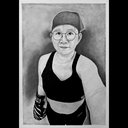

Most people don’t understand what it feels like to live between places. It is not exactly sadness. That is what I would want people to understand first. When they hear “between places,” they think of a wound, like a hole in the heart that never heals. That description does not fit. A “stretching” is more accurate.
I am Iban. My bones know the red earth of Sarawak and that is what my body recognizes first. But I have now lived in Kuala Lumpur longer than I ever lived there. I have a husband who grew up in Penampang, Sabah, and children who have only ever known this city as home. I pay the condo rent and fees. I navigate the highway to Puchong. I visit the Pasar Borneo in Seri Kembangan, where vendors sell dabai that has been flown in from Sarawak. My life is here but “here” does not feel like home in a complete way.
When I go back to the longhouse, I notice it in my cousins’ expressions. I am “the one from KL.” I speak the language, but sometimes the rhythm is slightly off. I have to pause to remember the right word for something I haven’t touched in years. I am welcomed, always, with warmth, food, and laughter, but there is a politeness to it. It’s a subtle sense that I am now a guest. My children, when they come with me, are treated with affection, but also with a gentle bewilderment. They are Iban, but they do not know how to be Iban in the way that is expected. I am no longer fully at home there either.

This leaves me in a scattered position. My identity is not a single point on a map. It is a thread that runs back and forth across the South China Sea. My children are the living proof of this stretch. Their identity extends across even more layers than mine. They are Iban-Kadazan by blood and suburban KL-ites by every lived experience. They eat nasi lemak for breakfast and request ayam pansoh or hinava for their birthday dinner. They speak English and Malay with a city accent and only understand a word or two of Iban or Kadazan. They are not disconnected from their heritage, I make sure of that, but they are also not rooted in it the way I once was. I see them working through their sense of being between places at school when asked where they’re “from.”
I used to feel guilty about this. As if I had not given them a single, stable foundation. I do not feel that way anymore. I have come to understand that geographical distance often reflects a connection, not a lack of it. I remain connected to my family through WhatsApp or Facebook.
Living between places means I am constantly translating language, meaning, belonging, and self. To my KL friends, I am the “exotic” one from Borneo, with the tattoos, living atop the trees, and the stories of the headhunter ancestors. To my family back home, I am the modern one, the city-dweller, and the one who left. Neither captures the full picture. The full truth is that I am both. People who have never left their home place might see this as a tragedy of loss. This misses something important. Staying in one place would have limited what I could carry with me.

I am not fully home in one place. The result is that I have made small homes in many. My identity is scattered like seeds. I am watching them grow, in my children and in the friendships I have built across this country.
It is a complicated way to live, but it is mine. It has made me capable of understanding something essential: that you can love a place deeply and still not belong to it entirely. That belonging can be a choice, a meal you cook, a story you tell, or a journey you make again and again. Many people do not understand what it feels like to live between places. But I do. And in that stretching I have found a form of wholeness I did not expect.
That's it for now. If you read this far, thank you. I appreciate it so much! I'm a non-native English speaker, and English is my third language. Post ideas and content are originally mine. Kindly give me a follow if you like my content. I mostly write about making art, writing, poetry, book/movie review and life reflections.
Note: If you decide to run my content on an AI detector, remember that no detectors are 100% reliable, no matter what their accuracy scores claim. And know that AI detectors are biased against non-native English writers.
Note: All images used belong to me unless stated otherwise.
Thank you for visiting and reading my post. I hope you like it!

For me, I think it doesn't matter where you live a along as you are with the people you love that is home.
Like myself, I grew up far from where I am residing now. I speak a different dialect when I am in my home town and another one when I am at home where I settled and got married. I guess we just have to embrace where we are and never forget where we came from.
That is true too.
Perfectly captured the subtle tension of belonging, identity and the delicate balance between two homes. Truly moving.
Thank you 🙏
I'm not saying it's your situation, but in may cases, those who stay, are somehow jealous pf those who left and have a better or a different life and are treated with coldness and many times comes meanness too. In bigger cities no one cares, people come from all over the place and are busy with their lives, but in small communities things are different.
I don't see why you should feel guilty about anything, you only have one life and you should live it as you please, and definitely not let others make you feel guilty about it. I don't see why you should live like they would want you to.
Thank you for sharing this I appreciate it. But I don't understand why you got downvoted? It was just an opinion 🤔. Anyway back to your comment, I can see how that can happen in certain situations. For me, it felt different. It came across differently to me, not rooted in jealousy or meanness but more like a subtle shift, where things remain familiar but slightly altered. I am still trying to understand that feeling though 😅
Don't worry about the downvotes. These are idiots, looking for attention, they downvote a lot of people.
View more
Qué reflexión tan hermosa y profundamente humana 💛 Me gustó mucho cómo describiste esa sensación de pertenecer a más de un lugar sin reducirla a tristeza, sino a expansión. Hay mucha verdad, identidad y ternura en tus palabras, y se siente muy auténtico de principio a fin.
Gracias por tus amables palabras. Como indígena en la diáspora, siento este sentimiento de desarraigo con mayor intensidad, así como la sutil tristeza de ver a mis hijos crecer lejos de sus raíces. Tienen su identidad indígena, pero no se sienten verdaderamente integrados.
⋆ ᴛʜᴇ ᴘʟᴀᴄᴇ ғᴏʀ sᴏᴜᴛʜᴇᴀsᴛ ᴀsɪᴀɴ ᴄᴏɴᴛᴇɴᴛ ᴏɴ ʜɪᴠᴇ
⋆ sᴜʙsᴄʀɪʙᴇ ᴛᴏ ᴛʜᴇ ᴀsᴇᴀɴ ʜɪᴠᴇ ᴄᴏᴍᴍᴜɴɪᴛʏ
⋆ ғᴏʟʟᴏᴡ ᴛʜᴇ ᴀsᴇᴀɴ ʜɪᴠᴇ ᴄᴏᴍᴍᴜɴɪᴛʏ ᴠᴏᴛɪɴɢ ᴛʀᴀɪʟ
⋆ ᴅᴇʟᴇɢᴀᴛɪᴏɴ ʟɪɴᴋs 25 ʜᴘ⇾50 ʜᴘ⇾100 ʜᴘ⇾500 ʜᴘ⇾1,000 ʜᴘ
I grew up in the province but moved to the city for work. Got married and had children. Our children our born in the city. And they have lived their entire lives here.
But we see to it that we are able to visit our relatives in the province or countryside. ☺️
My children love the visits every time.
Yes, that's right. As an Indigenous person in diaspora, I feel this sense of displacement more acutely, and the subtle grief of seeing my children growing far from their roots. They have their Indigenous identity but they don't truly belong.